0 Member(s) | 304 Guest(s)
Applebot, Baidu, Bing

Latvala Wins Rally Sweden and Leads Championship
by News Feeder, 01-01-2025, 09:33 PM
More...
Latvala Wins Rally Sweden and Leads Championship
by News Feeder, 01-01-2025, 09:33 PMFor the first time since Rally China in 1999, Toyota has won a round of the FIA World Rally Championship: on only the second event for the all-new Yaris WRC. Jari-Matti Latvala inherited the lead after yesterday's super special stage, when the former leader broke his steering. Latvala then won all three stages today to extend his advantage and claim the first rally win for TOYOTA GAZOO Racing World Rally Team. Juho Hänninen had a trouble-free day and scored more manufacturer points, meaning that TOYOTA GAZOO Racing is now second in the manufacturers' championship, while Latvala heads the drivers' standings, having sealed his 17th career win, his fourth in Sweden, and his first since Mexico 2016. In total, Jari-Matti won six stages: SS1, SS4, SS13, SS16, SS17 and SS18.
More...
Honda Accord and HR-V are “2017 Kelley Blue Book 5-Year Cost to Own Award” Winners
by News Feeder, 31-12-2024, 09:17 AM
More...
Honda Accord and HR-V are “2017 Kelley Blue Book 5-Year Cost to Own Award” Winners
by News Feeder, 31-12-2024, 09:17 AMTORRANCE, Calif. – Two 2017 Honda vehicles are winners in Kelley Blue Book's 2017 5-Year Cost to Own Awards, the Accord in the mid-size car category and for the second consecutive year the HR-V in the subcompact SUV/crossover segment. The awards recognize new vehicles with the lowest projected ownership costs based on Kelley Blue Book's 5-Year Cost to Own data for the initial five-year ownership period, taking into consideration such aspects as depreciation, expected fuel costs, finance an...
More...
Spirit of the Takumi is alive and well in South Africa
by News Feeder, 30-12-2024, 08:51 PM
More...
Spirit of the Takumi is alive and well in South Africa
by News Feeder, 30-12-2024, 08:51 PMROSSLYN, South Africa – The new 2017 Nissan GT-R represents the company's pinnacle of engineering and Japanese automotive expertise, with only five master craftsmen certified to hand-build each GT-R engine. Nissan extends this bespoke approach to the care and servicing of every GT-R through its global network of specially trained "Nissan High Performance Centers" (NHPCs) – including two in South Africa."Each of our Nissan GT-R customers has an NHPC Technician's number saved on their phone," said Robbie Roberts, workshop manager at BB Nissan Hatfield and the adjacent Nissan GT-R HPC in South Africa. "They are on first-name basis with the technician, who after a few services knows exactly how to service and set-up that customer's car."The concept of "One man, one engine" has been adopted from Nissan's Yokohama engine plant, where only five master craftsmen, or Takumi, have been certified to hand-build the VR38 GT-R engine. Each of them – Izumi Shioya, Nobumtisu Gozu, Tsunemi Ooyama, Matsumoto Tetsuji and their aptly named leader, Takumi Kurosawa – takes full responsibility for the building of an engine. They finish each engine with an engraved plaque with their name on it as a sign of their approval. "Stories abound of how these Takumi have rejected a perfectly operational and blue-printed VR38 engine because it 'felt wrong under my hand' or 'it did not sound quite right,'" said Xavier Gobille, managing director, Sales, Marketing and Aftersales at Nissan South Africa and Sub-Sahara. "This is one of the reasons the GT-R is so highly revered and mechanically bulletproof."In South Africa, NHPC technicians will take full responsibility for servicing a GT-R, using their specialist training to ensure that every GT-R performs to expectation. They qualify under the supervision of Japanese-trained specialists at Nissan South Africa's head office in Rosslyn, Tshwane, and they have to attend six days of additional training over and above their regular technical training every year. Many have also honed their skill at the GT-R training facilities in Japan."We have very specialized diagnostic equipment that is only used in the servicing of GT-Rs," said Roberts. "With this equipment, an NHPC technician is able to download detailed statistics from the GT-R's black box and see exactly how and when the car was used and how best to set up the vehicle."Mike Grobler, parts and service director of Melrose Nissan and its HPC, adds: "Clients will often spend significant time with the technician to discuss their GT-R's set-up, especially before an important track day or after such a day. The most fanatical of them will spend on average four hours watching the NHPC technician service the car from our glass-walled waiting room."Grobler, himself a trained GT-R NHPC technician, adds that they have serviced VR38-engined GT-Rs that have completed 40,000 km with one set of tires and brakes and have never had any mechanical failure of any major component."This is particularly impressive if you consider that some of the out-of-warranty GT-Rs have been tuned to deliver over 800 horsepower, yet none of the GT-Rs we service have ever experienced mechanical failure," said Grobler.At BB Nissan Hatfield, the GT-R with the highest mileage has just clocked 200,000 km, and the owner still drives at track speeds on a regular basis."This client has a very close relationship with Louis de Wet, our Centurion-based NHPC specialist," said Grobler. "He has never had any mechanical problems and only now, after 200,000 km, will we open the gearbox to service it."De Wet, like many of the other NHPC specialists, travels across South Africa to service GT-Rs. In doing so, he relies on Nissan South Africa's expansive dealer network, while he travels with his GT-R diagnostic computers and special high-speed data plugs.The Nissan GT-R is a rare type of supercar, as it is sold with a 3-year or 50 000 km service plan and a 100,000 km warranty for the same period. Nissan requires that the GT-R is serviced at least once a year, but the vehicle will self-diagnose and communicate to the owner if it requires a non-scheduled service, especially if it is regularly used on a race track."The new GT-R is as comfortable on the road, as it is on the track," said Grobler. "It is on the track that you see the bond between owner and car grow closer and they become more involved in setting up their car to their exact needs at their next service."Embed this cinemagraph on your website Embed this cinemagraph on your website Embed this cinemagraph on your website Embed this cinemagraph on your website About Nissan Motor Co., Ltd. Nissan is a global full-line vehicle manufacturer that sells more than 60 models under the Nissan, Infiniti and Datsun brands. In fiscal year 2015, the company sold more than 5.4 million vehicles globally, generating revenue of 12.2 trillion yen. Nissan engineers, manufactures and markets the world's best-selling all-electric vehicle in history, the Nissan LEAF. Nissan's global headquarters in Yokohama, Japan manages operations in six regions: ASEAN & Oceania; Africa, Middle East & India; China; Europe; Latin America and North America. Nissan has been partnered with French manufacturer Renault since 1999 and Mitsubishi Motors since 2016 under the Renault-Nissan Alliance. For more information on our products, services and commitment to sustainable mobility, visit our website at http://www.nissan-global.com/EN/. You can also follow @NissanMotor on Twitter. # # #
More...
What drives Carlos Ghosn, chapter 5: Nissan growth
by News Feeder, 30-12-2024, 08:36 AM
More...
What drives Carlos Ghosn, chapter 5: Nissan growth
by News Feeder, 30-12-2024, 08:36 AMWhat's life like as a global CEO? In this special multi-part series, Nissan Motor Co., Ltd. CEO Carlos Ghosn shares his life story, offering personal insights and professional lessons on what it takes to succeed. "What Drives Carlos Ghosn" Index PageA delayed but fortuitous China entry An unexpected partnership with Dongfeng helped Nissan tap a burgeoning marketNissan Motor was slow to make a full-scale entry into what has become the world's largest auto market: China. We had been there for 30 years and produced Nissan's first Cedric model for the Chinese market. But it was in 2000 that we started to realize the true opportunities. At the time, there were 1.2 billion people in China buying only 2 million cars a year. That's 10 cars per 1,000 inhabitants. In Japan, there were 600 cars being sold per 1,000 inhabitants. At a certain point, the Chinese market was going to boom. Carlos Ghosn shakes hands with an executive of Dongfeng Motor, Nissan's joint-venture partner in China.Toyota Motor and Honda Motor had already made their moves into China in the 1990s, but because of Nissan's necessary restructuring, our plans had been delayed. But there were plans. In February 2000, just before the Nissan Revival Plan was launched, I met with Toshiyuki Shiga, who was in charge of corporate planning (he would later become chief operating officer) and told him to start preparing plans to expand into China. The market was still in its infancy, but we knew the potential it represented.I had a chance to meet Wu Bangguo, deputy prime minister of China. I went with the intention of posing many questions to Mr. Wu, but he pre-empted me."Mr. Ghosn, you revived Nissan, and we need some help at a state-owned automaker called Dongfeng. If you were allowed equity participation, would it be possible for you to support the revival of this company?"I was caught totally off guard. In China at that time, there was a general reluctance to offer any more joint-venture licenses. In fact, in the automotive sector, foreign entities were prohibited from owning more than 50% of capital in a joint venture. But with the support of authorities, we were able to create a deal unlike any other.The scale of the project had suddenly become enormous, valued at more than 100 billion yen ($851 million at current rates). This posed a tremendous opportunity, not only to open the door to the Chinese market, but also to contribute to the entire business of Dongfeng. It also provided Nissan with the opportunity to catch and even surpass car companies that had been in China for much longer.So in March 2002, Nissan announced a capital tie-up with Dongfeng, and we began working on this historic new venture immediately. We created a mission team called the Golden Triangle and held meetings every other week to review reports. But as the project grew, we found that a conventional conference style no longer allowed us to hear reports from all of our teams.I began to hold Friday night meetings with Shiga-san and a handful of other team members at an Italian restaurant near my house. I usually don't work too many late evenings, as I reserve those hours for family, but this required extra effort. After we finished our plates, I let the questions fly. Our primary concern was not the financial situation of Dongfeng, but whether we could achieve a real partnership.In the end, things went well with Dongfeng executives. We established a strong relationship with Mr. Miao Wei, who was chairman at the time, and with Mr. Xu Ping, his successor. One of the reasons for this rapport was because the Chinese people had a deep respect for Japanese products. Dongfeng also benefited from Nissan's global management expertise. In return, Nissan was able to leverage Dongfeng's local assets, so we weren't starting from scratch. It wasn't risk free, but it was an important part of our strategy.Today, our sales in China are a significant contributor to our global totals. And we see tremendous opportunity for low- and even zero-emission vehicles to be developed in the Chinese market.On a personal note, after visiting China several times, I learned how to write my name in Chinese characters. I was completely fascinated by these characters and practiced them privately in my free time.This portion of My Personal History: Carlos Ghosn was originally posted on Nikkei Asian Review.Codifying the Nissan Way After the success of Nissan 180, Ghosn and his team set a course for lasting growthI have on the bookcase in my office a photo book titled "Shift," which charts our journey from 1999, when I first came to Japan, to 2005, which marked the end of the Nissan 180 plan. Copies of "Shift" were distributed worldwide and handed out to all Nissan Motor employees, and it does its best to capture the six years that, as I wrote in the book, forever changed us, as a company and also as leaders. The final photo is especially meaningful: It captures the moment right after we sold our 1 millionth vehicle, reaching our Nissan 180 goal. Carlos Ghosn and Nissan Motor employees celebrate addition of 1 million vehicles.The book is an important record of the incredible feat the people of Nissan achieved. But in addition to recording the past, I believed we also needed something to guide us in the future. That something became the "Nissan Way."In 2005, a number of executives, including myself, attended a daylong retreat at a camp in Hakone, some 100km southwest of Tokyo, to discuss various ideas. We wanted to create a global code of conduct that the entire Nissan community could embrace. It was based on the idea that, "The power comes from inside" and is divided into five mindsets and five actions that all Nissan employees are expected to demonstrate to this day.That same year -- 2005 -- was a turning point for both Nissan and myself. In May, I was appointed CEO of Renault. Former Chairman Louis Schweitzer had announced that I would be his successor three years before he stepped down as CEO. He had even wanted me to take the helm prior to 2005, but I asked him to wait because I wanted to concentrate on rebuilding Nissan.With this promotion, I became the first CEO to simultaneously lead two Fortune 500 companies. This position allowed me to further deepen the relationship between the two automakers through the Renault-Nissan Alliance.Leading both a French and a Japanese company required a major shift in how and where I spent my time. Until then, I had spent three weeks of each month in Japan and one week on overseas business trips. However, in order to also lead Renault effectively, I needed to reorganize my time: one-third in France, one-third in Japan and the remaining third in the markets where we operate. My family returned to France.At Nissan, I named a chief operating officer to handle management along with me. I appointed Toshiyuki Shiga, who was then a managing director. Because I now wore two hats, I could not manage Nissan the way I did before. Of course, strategy is ultimately decided by the highest decision-making group, the Executive Committee, which I chaired, but a certain degree of role-sharing was necessary. As I take on the role of Mitsubishi Motors chairman today, I have similarly asked our chief competitive officer, Hiroto Saikawa to step into the role of co-chief executive officer of Nissan.That said, I still like to be a hands-on manager. I want to know what's happening in the development, production and sales offices, and I make extra time in my schedule to visit them. Even at the top level of an organization -- and maybe even especially then -- there is always something to be gained by seeing and feeling things for yourself. As I take on additional responsibilities as Mitsubishi chairman, I will continue to find time to do these things. To me, if you think there aren't enough hours in a day, you simply aren't maximizing the ones you have.This portion of My Personal History: Carlos Ghosn was originally posted on Nikkei Asian Review.Gaining depth with the Renault-Nissan Alliance Ghosn discovers the challenges and rewards of heading two carmakers By the year through March 2006, Nissan 180 had ended, and we were in the first year of the next medium-term plan: Nissan Value-Up. For the first time, our recovery was starting to lose momentum. Some attributed this to a bounce-back effect after reaching the Nissan 180 goal of increasing global sales by 1 million vehicles. Other causes seemed to be affecting the industry at large, brought on by emerging technologies, shifting consumer preferences, high oil prices and the entry of new competition from regions like China and India. Carlos Ghosn, left, and Louis SchweitzerI wasn't worried. The morale of employees was high, and they continued to work hard toward achieving our next set of goals.This was my first year as the leader of both Nissan Motor and Renault. I would spend the first week of the month at Renault and the third week at Nissan. In between, I would visit other regions as needed, traveling to the U.S., China, Russia, South America and various European countries.Serving as the top executive of two large companies simultaneously was unique and especially challenging, but it had its rewards. I had to be constantly mindful that Renault was one company and Nissan was another. Each had its own decision-making body, board of directors, shareholders and so on. We never made a decision about Renault in Tokyo, and we never made a decision about Nissan in Paris. These two companies had nothing in common except the willingness to cooperate in some areas for the good of both. I carried separate briefcases and had separate schedulers; the job organized itself.The other challenge was making sure to always weigh the interests of Renault and Nissan equally. I allocated my time between the companies 50-50 and made sure it was clearly logged and transparent to all employees.This is what made the Renault-Nissan Alliance different than an acquisition or merger. An "alliance" was a new, third type of business relationship, which fostered a deep sense of belonging. It was important that no one feel as though they were compromising or sacrificing as a result of the alliance. But while I was adamant that the companies remain distinct entities, we also sought for Nissan and Renault to share information and development resources to maximize performance and leverage synergies.Because of the alliance, Nissan was able to enhance an important skill: working in a multicultural environment. Nissan experienced the full range of global cooperation with Renault, such as sharing in purchasing, technology, production, information technology and integration in human resources. The cross-cultural sharing has been just as important as our business synergies. The alliance between Renault and Nissan works because both the Japanese and French put forth an equal amount of effort to make it work.The alliance helped Nissan open its doors to the world while maintaining its identity. It hasn't always been easy, but it's what has positioned us to compete in today's auto industry. In the years to follow, this would become even more critical.This portion of My Personal History: Carlos Ghosn was originally posted on Nikkei Asian Review.Bringing back an icon Carlos Ghosn's decision to resurrect the GT-R gave Nissan a fresh sparkAt the end of 2007, I announced the revival of a Nissan icon: the high-performance GT-R sports car. The model had been discontinued in 2002, and a successor had not been announced. At the time, Nissan Motor was in the midst of its revival, and it did not have the funds or human resources to devote to a sporty, high-performance car. But, as with our China strategy, we were putting the building blocks in place. Carlos Ghosn revived the GT-R sports car to inspire Nissan employees and help burnish the brand.Reviving the GT-R, and also the Z, was about more than just the vehicles themselves – it was about reviving our brand. How society, customers and shareholders saw the company was critical to our success. And that included our employees. Morale among Nissan employees was low when I came to Japan. To motivate them, I focused on creating projects that would build excitement and give them reasons to be proud of their company. A flagship car was one of those projects.First, I set out to reform our design department. A month after I became chief operating officer in June 1999, I started a search for a new head designer. My first condition was that the right candidate should come from outside the company. While it was important to me that Nissan employees rebuild Nissan themselves, I felt the role of a new designer required someone with fresh eyes and new approaches. At the time, the technology department had a significant influence over the design of our products, which wasn't an ideal process. Designers did not feel valued, and they weren't encouraged to express bold new ideas. If we were to resurrect these iconic cars – and build them for the future – we needed designers who weren't bound by past policies. This required us to look beyond Nissan's walls.My second condition was that the new design head would be Japanese; it would be important that these flagship cars reflect the beauty and culture of Japan. Third, the right candidate would have proven global success.My search ended with Shiro Nakamura, who to this day is the chief creative officer, overseeing design operations across our three brands, Nissan, Datsun and Infiniti. When I met him, Nakamura-san was a successful designer at Isuzu Motors. I told him that if he took the job, he would be expected to sign off on all final designs. Until then, this had not been the case at Nissan. Because it was not clear who signed off on final designs, no one needed to take responsibility when things went poorly. Nakamura-san accepted my condition.Under Nakamura-san's design leadership, Nissan released a new Z in 2002 and then the GT-R in 2007. The GT-R became one of the highlights of our medium-term plan, called Nissan Value-Up. It gave the Nissan brand a much-needed spark and generated sustained profitability. The GT-R assumed a brand leadership role in the U.S., the Middle East and Europe.The GT-R succeeded in integrating Japanese character with global appeal in its design. This is a balance we continue to strike: While the majority of our designers are based in Japan, we seek out those who can ensure that we convey the Japanese roots of our cars in ways that appeal to all of the markets where the cars will be sold.The GT-R's revival was not just about design. We also focused on great engineering and top performance, without high spending. We built it from the ground up to be unique in the high-end sports car segment. It is still my favorite car to drive today.Embed this cinemagraph on your website Embed this cinemagraph on your website Embed this cinemagraph on your website 2017 Nissan GT-RThis portion of My Personal History: Carlos Ghosn was originally posted on Nikkei Asian Review.Chapter 6 will be posted on Wednesday, February 15. "What Drives Carlos Ghosn" Index Page # # #
More...
Harvey Norman joins Simona de Silvestro on her Supercar journey in Australia
by News Feeder, 29-12-2024, 07:45 PM
More...
Harvey Norman joins Simona de Silvestro on her Supercar journey in Australia
by News Feeder, 29-12-2024, 07:45 PMMELBOURNE, Australia – Retail giant Harvey Norman announced its support of Simona de Silvestro's No. 78 Nissan Altima in the 2017 Virgin Australia Supercars Championship.The striking red livery of the Team Harvey Norman entry was officially unveiled at this year's Championship launch today at Adelaide Oval, with de Silvestro excited to get her season underway."The car looks fantastic – red goes faster, right?" said de Silvestro. "It's great to show off the Altima I will be racing this year, as well as announcing that Harvey Norman will be supporting me. Harvey Norman was with me at the last two Bathurst 1000s, so it's great to have them onboard again."The 28-year-old Swiss driver has a decorated track record in open-wheel racing, recording a podium in IndyCar, and landing a testing role with the Sauber F1 Team. But this will be her first full-time season racing the Nissan Altima Supercar.Related: Simona de Silvestro signs with Nissan Motorsport in Australian Supercars"Everyone has been really welcoming to me since I arrived, so I can't wait to get racing," said de Silvestro. "We have started our testing program, and I'm feeling really comfortable in the car and with the team. This season will be challenging, as it's my first full year driving the Altima. But I have a great team around me, and I'm really looking forward to going racing at the Clipsal 500."Having already raced with Nissan and de Silvestro during last year's Bathurst 1000 – in the Harvey Norman Supergirls Wildcard entry – today's announcement expands Harvey Norman's commitment with a new multi-year agreement."It will come as a surprise to no one that Harvey Norman have committed to a three-year partnership with Simona de Silvestro in her Supercars driving campaign for Nissan Motorsport," said Harvey Norman CEO Katie Page. "Simona has raced Formula-E, IndyCars and has had a taste of driving Supercars as one half of the Harvey Norman Supergirls Wildcard team at Bathurst. We know she is seriously talented. Harvey Norman seek out exceptional athletes: women who excel in their chosen sport, are driven to succeed, and train both mentally and physically to be the best and make a contribution to their sporting community. On every measure, Simona is that athlete. I can't wait to join 250,000 other fans and watch Simona race in the Supercars season opener next month at the Clipsal 500."Nissan Motorsport also welcomes two major consumer electronic brands, LG and Lenovo, who will also support de Silvestro's campaign.For Nissan Motorsport Team Owner Rick Kelly, the new season now has added excitement."It's always great to welcome new brands to our team," said Kelly. "We were fortunate to work with Harvey Norman last year, but to have them now as part of our team is a huge endorsement of what we're doing and where we're headed. With also LG and Lenovo involved, we have two new exciting brands to go and represent. So we're all very keen to get the season started."In a special feature at the season opener in Adelaide, Team Harvey Norman will also see representation of SA Tourism."The investment by South Australia in this event is enormous and we are very grateful to Minister Leon Bignell and his Team for getting behind Simona during the launch of her full time Supercar campaign," said Kelly.The No. 78 Team Harvey Norman Nissan Altima will first hit the track for a pre-season test at Sydney Motorsport Park on February 21 before the season-opening Clipsal 500 from March 2 to 5. # # # ContactJane Johnstone Marketing Communications Director Global Motorsport Communications Nissan/NISMO Phone: +44 7979 710646 Email: [email protected] Ryan Marketing and PR Manager Phone: +1 678 644 0404 Email: [email protected]
More...
Nissan reports nine-month results for fiscal year 2016
by News Feeder, 29-12-2024, 07:40 AM
More...
Nissan reports nine-month results for fiscal year 2016
by News Feeder, 29-12-2024, 07:40 AMYOKOHAMA, Japan – Nissan Motor Co., Ltd. today announced financial results for the nine-month period to December 31, 2016.“In the first nine months of the fiscal year, Nissan generated an operating profit of 503.2 billion yen, which represents a 6.1% margin on net revenues of 8.26 trillion yen,” said Carlos Ghosn, Chairman and Chief Executive Officer. “Although these results reflect continued currency headwinds, we remain confident of achieving our fiscal year guidance.”“On a constant currency basis, operating profit rose 30.1% to 764.6 billion yen, equivalent to an 8.1% profit margin. Our underlying performance was enhanced by solid product demand in the US, China and Western Europe, along with the continued benefits of our strict cost controls and synergies from our Alliance strategy.” Fiscal Year 2016 Nine-Month Financial HighlightsThe following table summarizes Nissan’s financial results for the nine-month period to December 31, 2016, calculated under the equity accounting method for the Group’s China joint venture. Fiscal Year 2016 Nine-Month Financial Highlights to December 31, 2016 (TSE report basis – China JV equity basis)1Yen in billionsFY 9M 15FY 9M 163% change year on yearFY 9M 16 at constant currency% change at constant currencyRevenues8,943.08,264.8-7.69,426.1+5.4Operating profit587.5503.2-14.3764.6+30.1Operating margin %6.66.1-0.58.1+1.5Ordinary profit631.0590.2-6.5N/AN/ANet income2452.8414.2-8.5N/AN/AOn a management pro forma basis, which includes the business results of Nissan’s operations in China, FY16 nine-month net revenue was 9.01 trillion yen. Operating profit was 601.9 billion yen. The operating profit margin was 6.7%.On a constant currency exchange rate basis, pro-forma net revenues were 10.34 trillion yen and operating profit was 882.2 billion yen, equivalent to a profit margin of 8.5%. Sales performanceIn the first nine months of the fiscal year, Nissan’s total unit sales rose by 2.6% to 3.99 million units.In the U.S., Nissan’s sales rose by 4.2% to 1.16 million units, equivalent to a market share of 8.7%, amid strong demand for the Rogue and Altima.Nissan unit sales in China, which reports figures on a calendar year basis, rose 8.2% to 929,000 units, equivalent to market share of 5.0%. In Europe, excluding Russia, Nissan’s sales rose by 5.5% to 474,000 units, which resulted in a market share of 3.6%. The Qashqai SUV and X-Trail helped drive demand in the region.Nissan’s performance in these key markets helped offset challenging conditions in the Japanese market. Total unit sales in the nine-month period for Japan were 344,000 units, representing a market share of 9.8%. In other markets including Asia and Oceania, Latin America, the Middle East and Africa, Nissan’s sales decreased 3.9% to 596,000 units. Outlook“We expect to deliver solid earnings and strong free cash flow generation for Fiscal Year 2016,” said Mr. Ghosn. “The Board remains committed to increasing the full year dividend by 14.3% to 48 yen per share.”The Company expects to sell 5.6 million units this fiscal year, up 3.3% on fiscal 2015. Based on this sales outlook, Nissan has maintained forecasts first issued to the Tokyo Stock Exchange in May 2016. Calculated under the equity accounting method for the fiscal year ending March 31, 2017, the forecasts showed:Nissan FY16 Outlook – TSE report basis – China JV equity basis1Net revenue¥11.8 trillionOperating profit¥710.0 billionOrdinary profit¥800.0 billionNet Income2¥525.0 billion For detailed Nissan financial information and presentations: http://www.nissan-global.com/EN/IR/FINANCIAL/ 1 Since the beginning of fiscal year 2013, Nissan has reported figures calculated under the equity method accounting for its joint venture with Dong Feng in China. Although net income reporting remains unchanged under this accounting method, the equity-accounting income statements no longer include Dong-Feng-Nissan’s results in revenues and operating profit. 2 Net income attributable to owners of the parent 3 Based on average foreign exchange rates of JPY 106.6/USD and JPY 118.0/EUR About Nissan Motor Co., Ltd.Nissan is a global full-line vehicle manufacturer that sells more than 60 models under the Nissan, Infiniti and Datsun brands. In fiscal year 2015, the company sold more than 5.4 million vehicles globally, generating revenue of ¥12.19 trillion. Nissan engineers, manufactures and markets the world's best-selling all-electric vehicle in history, the Nissan LEAF. Nissan's global headquarters in Yokohama, Japan, manages operations in six regions: ASEAN & Oceania; Africa, Middle East & India; China; Europe; Latin America and North America. Nissan has a global workforce of 247,500, and has been partnered with French manufacturer Renault under the Renault-Nissan Alliance since March 1999. # # #
More...
Honda Looks Toward Tomorrow with 2017 Clarity Fuel Cell Marketing Campaign
by News Feeder, 28-12-2024, 07:20 PM
More...
Honda Looks Toward Tomorrow with 2017 Clarity Fuel Cell Marketing Campaign
by News Feeder, 28-12-2024, 07:20 PMMulti-channel campaign introduces new Clarity Fuel Cell as an everyday drivable sedan with class-leading features Inspired by Honda's "Blue Skies for Our Children" environmental vision "Thinking About Tomorrow" TV spot directed by PES, creator of Honda's "Paper" and "The Power of Ridgeline" commercials TORRANCE, Calif. – Honda is introducing the all-new, five-passenger 2017 Clarity Fuel Cell with a multi-channel marketing campaign, "Always Thinking About Tomorrow," focused on taking fuel ...
More...
Renault-Nissan Alliance delivers significant growth in 2016, extends electric vehicle
by News Feeder, 28-12-2024, 07:14 AM
More...
Renault-Nissan Alliance delivers significant growth in 2016, extends electric vehicle
by News Feeder, 28-12-2024, 07:14 AMAlliance sales reach 9,961,347 vehicles in 2016 – one in nine cars sold worldwide.The Alliance confirms its zero-emission* leadership; cumulative sales reach 424,797 electric vehicles worldwide.18-year old partnership sees boost in innovation for the vehicle of the future.PARIS — The Renault-Nissan Alliance delivered significant growth in 2016, with global sales of 9.96 million vehicles. The car group also reinforced its leadership in zero-emission vehicles with cumulative sales of nearly 425,000 electric vehicles since the introduction of the Nissan LEAF in 2010, followed by the Renault ZOE.The Alliance sales figures include Mitsubishi Motors sales of 934,013 vehicles globally. Mitsubishi Motors joined the Alliance last fall with Nissan's acquisition of a 34 percent equity stake in the company."The combination of Groupe Renault, Nissan Motors and Mitsubishi Motors creates a new force in the global auto industry," said chairman and CEO Carlos Ghosn. "The strength of this innovative partnership that began 18 years ago has allowed us to improve our competitiveness, boost our growth and engage in the race for the vehicle of the future."The Alliance brands accounted for about one in nine cars sold worldwide last year.Groupe Renault's sales were up 13.3 percent to 3,182,625 vehicles in 2016 for the last year of the "Drive the Change" plan. This marked the fourth consecutive year of sales growth with a record year-on-year increase of 374,000 units.Both Renault and Dacia brands had a record year in terms of sales volumes and Renault Samsung Motors volumes were up by 38.8 percent. Market share and sales volumes are up in all regions, with the Renault brand becoming No. 2 in Europe.Nissan Motor Co. Ltd. sold a record 5,559,902 cars and trucks worldwide, up 2.5 percent. In the U.S.A. and China, the company achieved sales growth of 5.4 percent and 8.4 percent respectively, setting new records in both markets. Infiniti sold over 230,000 vehicles in 2016, a 7 percent increase from the previous year. In December alone, Infiniti sold 27,200 vehicles, an 18 percent increase versus the prior year.Mitsubishi Motors sold 934,013 cars worldwide, down 13 percent. Sales grew in the United States and Australia, but were offset by lower sales in Brazil, Russia, and the Middle East. Japan sales were also affected by lower consumer confidence following the fuel consumption issue.Through Nissan's partnership with Mitsubishi Motors, Nissan expects to target synergy benefits worth 24 billion yen in fiscal year 2017, rising to 60 billion yen in fiscal year 2018 and beyond. The gains will contribute to increased earnings per share worth an estimated 4 yen per share in fiscal year 2017 and 10 yen per share in fiscal year 2018 – on top of any earnings accretion linked to Nissan's overall shareholding in Mitsubishi Motors.AVTOVAZ, which sells cars under the LADA brand, sold 284,807 vehicles. Together, the Renault-Nissan Alliance and AVTOVAZ sell about one in three cars in Russia.Sustained leadership in electric vehiclesThe Renault-Nissan Alliance, with Mitsubishi Motors, cumulatively sold 424,797 electric vehicles through 2016, making it the undisputed leader in zero-emission mobility.The Nissan LEAF, the first mainstream, mass-marketed electric vehicle, remains the world's best-selling EV with more than 250,000* vehicles sold since its launch in December 2010.In addition to the LEAF, Nissan also sells the e-NV200, a light commercial vehicle sold mainly in Europe and Japan since 2014.Renault has sold more than 112,000 electric vehicles worldwide since 2011, including the Renault ZOE, Kangoo Z.E., Fluence Z.E., the SM3 Z.E. and the Twizy.Renault was at the top of the European EV market last year, with sales up by 11 percent at 25,648 units (excluding Twizy). ZOE led the EV ranking with 21,735 sold. Renault Pro+ recently announced the addition of two new commercial EVs to its lineup: the New Kangoo Z.E. and Master Z.E.In 2016, the Renault-Nissan Alliance, including Mitsubishi Motors i-Miev series, sold 94,265 EVs, up more than 8 percent from 2015.* Including Venucia E30 sales in China. No CO2 emissions and no regulated exhaust pollutants while driving, according to NEDC homologation cycle.Boosting innovation for the vehicle of the futureIn 2016, the Renault-Nissan Alliance took several steps to advance the development of future vehicles that will be electric, autonomous and connected.The Alliance plans to launch at least 10 models with autonomous drive functionality by 2020. Development and tests of connectivity and autonomous drive technologies are underway with several partners, including Microsoft and NASA."We were the first to launch an affordable electric car back in 2010. Other major automakers are now recognizing that EVs are the most effective zero-emission solution," Ghosn said. "With autonomous drive and connected cars and services, we are firmly engaged in the race for the vehicle of the future." Top 10 Alliance MarketsCountryTotal SalesMarket ShareU.S.A.1,660,6909.47%China1,472,5885.48%France738,34430.52%Japan625,40912.58%Russia*494,07334.64%Mexico449,40628.02%U.K.336,53310.96%Germany319,7398.89%Italy262,16712.99%Spain247,66118.71%*Including AVTOVAZ Top 10 Groupe Renault Markets CountryTotal SalesMarket ShareFrance651,77826.9%Germany198,6095.5%Italy190,6109.4%Spain170,27212.9%Turkey169,23617.2%Brazil149,9777.5%U.K.138,6424.5%India132,2354.0%Russia*117,2278.2%South Korea111,0876.2%* AVTOVAZ sales in Russia: 284,807 Top 10 Nissan MarketsCountryTotal SalesMarket ShareU.S.A.1,564,4238.9%China*1,354,5525.0%Japan534,39210.8%Mexico403,28625.1%U.K.170,9995.6%Canada134,1536.9%Russia93,7816.6%France81,4543.4%Germany80,3322.3%Australia67,6385.7%*Including Venucia brand Top 10 Mitsubishi Motors Markets CountryTotal SalesMarket ShareU.S.A.96,2670.5%Japan85,7161.7%China82,7580.3%Australia73,3606.2%Indonesia67,3976.3%Philippines59,48015.1%Thailand55,4097.2%Germany39,0891.1%U.A.E.29,9589.2%U.K.26,8920.9% About the Renault-Nissan Alliance The Renault-Nissan Alliance is a strategic partnership between Groupe Renault of France and Japan-based Nissan Motor and Mitsubishi Motors. The automakers combined sold 9.96 million vehicles in nearly 200 countries in 2016 – more than one in 9 vehicles worldwide. The Alliance has strategic collaborations with other automakers, including Germany's Daimler and China's Dongfeng. It also owns a majority stake in the joint venture that controls Russia's top automaker, AVTOVAZ. The Alliance is the industry leader in zero-emission vehicles and is developing the latest advanced technologies, with plans to offer autonomous drive and connectivity features and services on a range of affordable vehicles.http://www.media.blog.alliance-renault-nissan.com http://www.media.renault.com newsroom.nissan-global.com # # # ContactBlanca Garcia [email protected] + 33 6 06 90 10 49Aline Henry [email protected] +33 6 03 09 54 97
More...
Qashqai wins best SUV award in Morocco for the third consecutive year
by News Feeder, 27-12-2024, 06:52 PM
More...
Qashqai wins best SUV award in Morocco for the third consecutive year
by News Feeder, 27-12-2024, 06:52 PMCASABLANCA, Morocco – Reflecting its success in the Moroccan market, the Nissan Qashqai was named SUV of the year from Autonews magazine. The award ceremony was held in Casablanca, Morocco.Autonews magazine made the selection after more than 30,000 consumers participated in a poll, considered one of the most important surveys in Morocco. The poll starts by allowing more than 30,000 voters to choose from hundreds of models in all categories, with 10 cars being nominated as finalists. The finalists then enter a series of dynamic and endurance tests and earn points for each category. The tests were held in the international circuit Moulay El Hassan of Marrakech.Qashqai earned the title as the best SUV in the Moroccan market for the third consecutive year after enduring several tests, proving its supremacy among other models in the SUV category while gaining the most points in the all the tests.Qashqai maintains record sales volume of 8,422 units sold since it was first launched in Morocco in December 2014. Qashqai was one of the most sold cars in Morocco in 2016 by selling 4,667 units, which represents 14.6 percent of SUV segment sales in the Moroccan market.Isao Sekiguchi, chairman and managing director of Nissan North Africa, said that Qashqai's unique success reflects Nissan's strategy of putting customers and consumers as the top priority.In Morocco, Qashqai comes equipped with a 1.5-liter diesel engine producing 110bhp. It reaches 100 km per hour (62mph) in 11.9 seconds. Qashqai also comes with in a faster version equipped with a 1.6-liter diesel engine with 130bhp and a 0-100 km time of 9.9 seconds.About Nissan Motor Co., Ltd. Nissan is a global full-line vehicle manufacturer that sells more than 60 models under the Nissan, Infiniti and Datsun brands. In fiscal year 2015, the company sold more than 5.4 million vehicles globally, generating revenue of 12.2 trillion yen. Nissan engineers, manufactures and markets the world's best-selling all-electric vehicle in history, the Nissan LEAF. Nissan's global headquarters in Yokohama, Japan manages operations in six regions: ASEAN & Oceania; Africa, Middle East & India; China; Europe; Latin America and North America. Nissan has been partnered with French manufacturer Renault since 1999 and Mitsubishi Motors since 2016 under the Renault-Nissan Alliance.For more information on our products, services and commitment to sustainable mobility, visit our website at http://www.nissan-global.com/EN/. You can also follow @NissanMotor on Twitter.# # #ContactDoaa Yousry Regional Communications Manager Nissan Africa North Mobile: +20 1099850131 Email: [email protected] Ghanem Regional Communications Senior Specialist Nissan Africa North Mobile: +20 1000697692 Email: [email protected]
More...
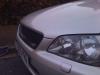
Subz DC5
by James S, 26-12-2024, 10:42 AM

Anyway got a new car, its amazing, Honda Integra Type R, not going to do a full build thread, but know you lot like pictures, so here you go.
![[Image: 20170129_102424.jpg]](https://s26.postimg.org/utwpkc4zd/20170129_102424.jpg) upload photo
upload photo![[Image: 20170129_102431.jpg]](https://s26.postimg.org/ex2j1d1yx/20170129_102431.jpg) photo uploader
photo uploader![[Image: 20170126_165058.jpg]](https://s26.postimg.org/jmsgpyszd/20170126_165058.jpg) forum image hosting
forum image hosting![[Image: 20170129_144558.jpg]](https://s26.postimg.org/f5mbm2am1/20170129_144558.jpg) image url
image url![[Image: 20161122_141821.jpg]](https://s26.postimg.org/5frb0cfy1/20161122_141821.jpg) upload image online
upload image online![[Image: 20161127_152414.jpg]](https://s26.postimg.org/n6hsnl86x/20161127_152414.jpg) gifs upload
gifs uploadNot on here much anymore as I am well past the IS200 now. Still follow the various facebook forums you lot frequent.
Anyway got a new car, its amazing, Honda Integra Type R, not going to do a full build thread, but know you lot like pictures, so here you go.
upload photo
photo uploader
forum image hosting
image url
upload image online
gifs upload